Lesson Ideas
Step-by-step visual guides for getting the most out of your Walk the Plane mat. Browse the tutorials below and bring the coordinate plane to life.
Materials (Chips, Letters, and Ordered Pairs)
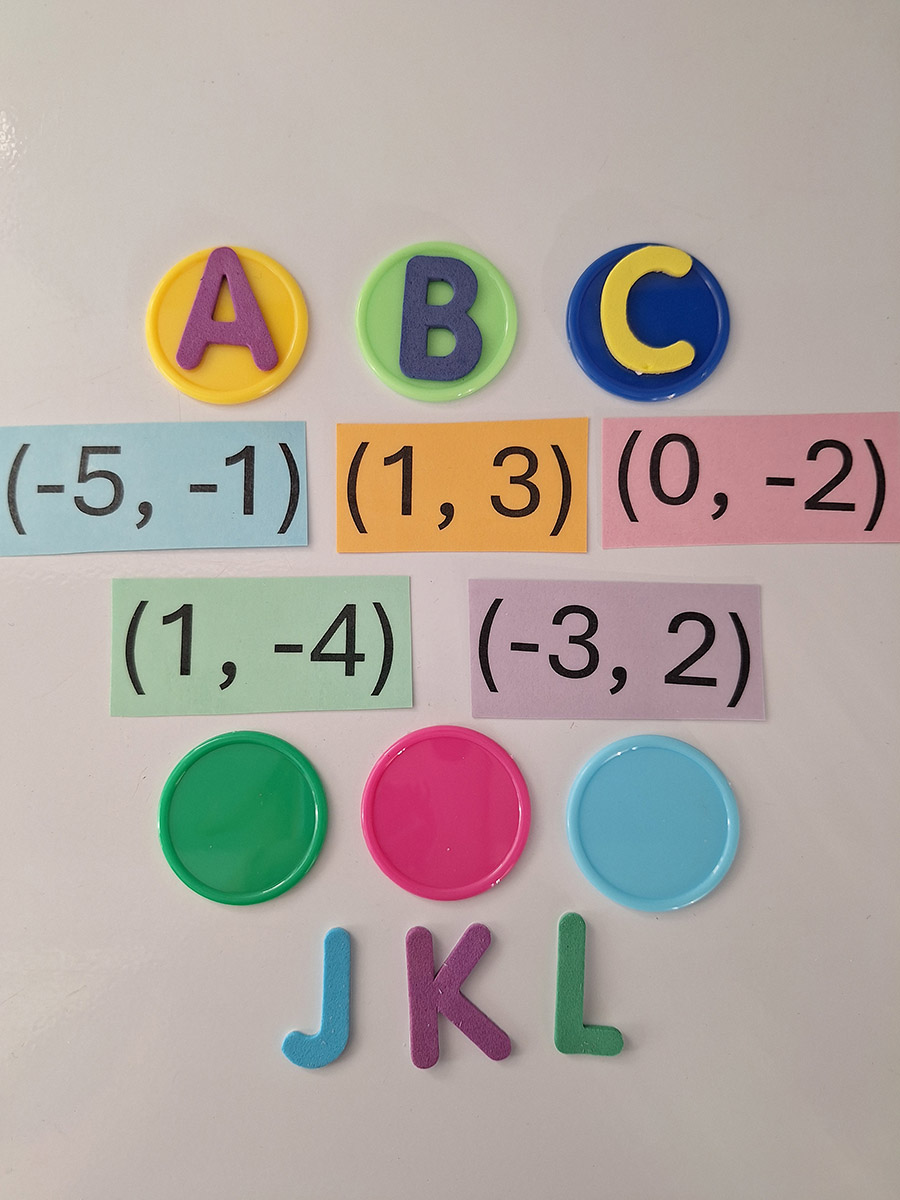
You can get chips from Amazon. A diameter of one and a half inches works well. The foam letters are 1.1 x 0.9 inches. They fit nicely on the chips. I ordered these from Amazon. I typed all the possible ordered pairs (121 of them) and printed them out on different colors of paper. Once you laminate and cut them out, you can use them countless times for so many activities. Choose a font with slim parentheses and numbers so you are not wasting ink, like Abadi Extra Light or Aptos Light. Print a page first and decide if you want to use bold. I do not know the font I used in the ordered pair pics.
Tip: Attach your foam letters to chips for easy placement and removal.
Tip: Attach your foam letters to chips for easy placement and removal.
Coordinate Plane Vocabulary
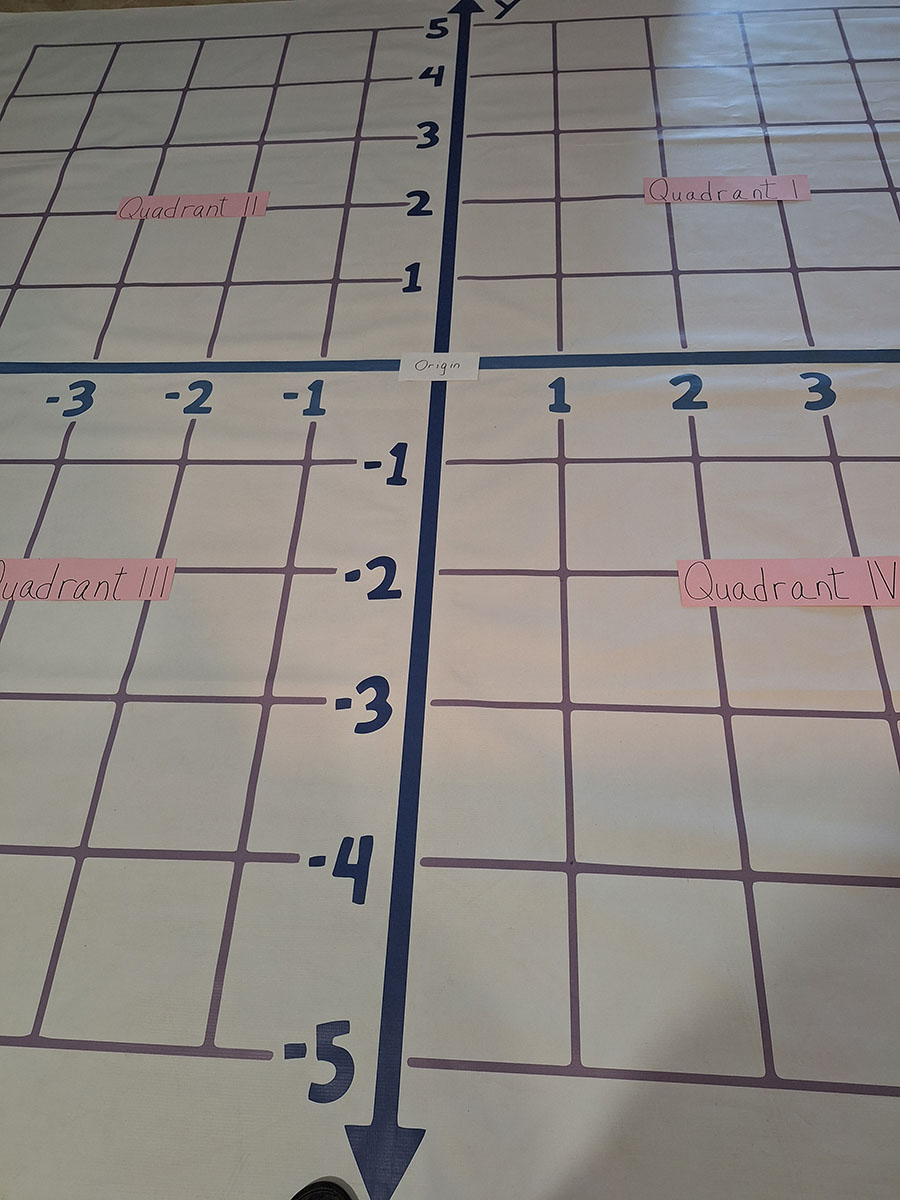
Tip: Have students stand at the point of origin and jump to the quadrant you call out. Bean bags are a great option to use with games or activities in your lessons, as well. Use your imagination and have fun.
Teaching Ordered Pairs
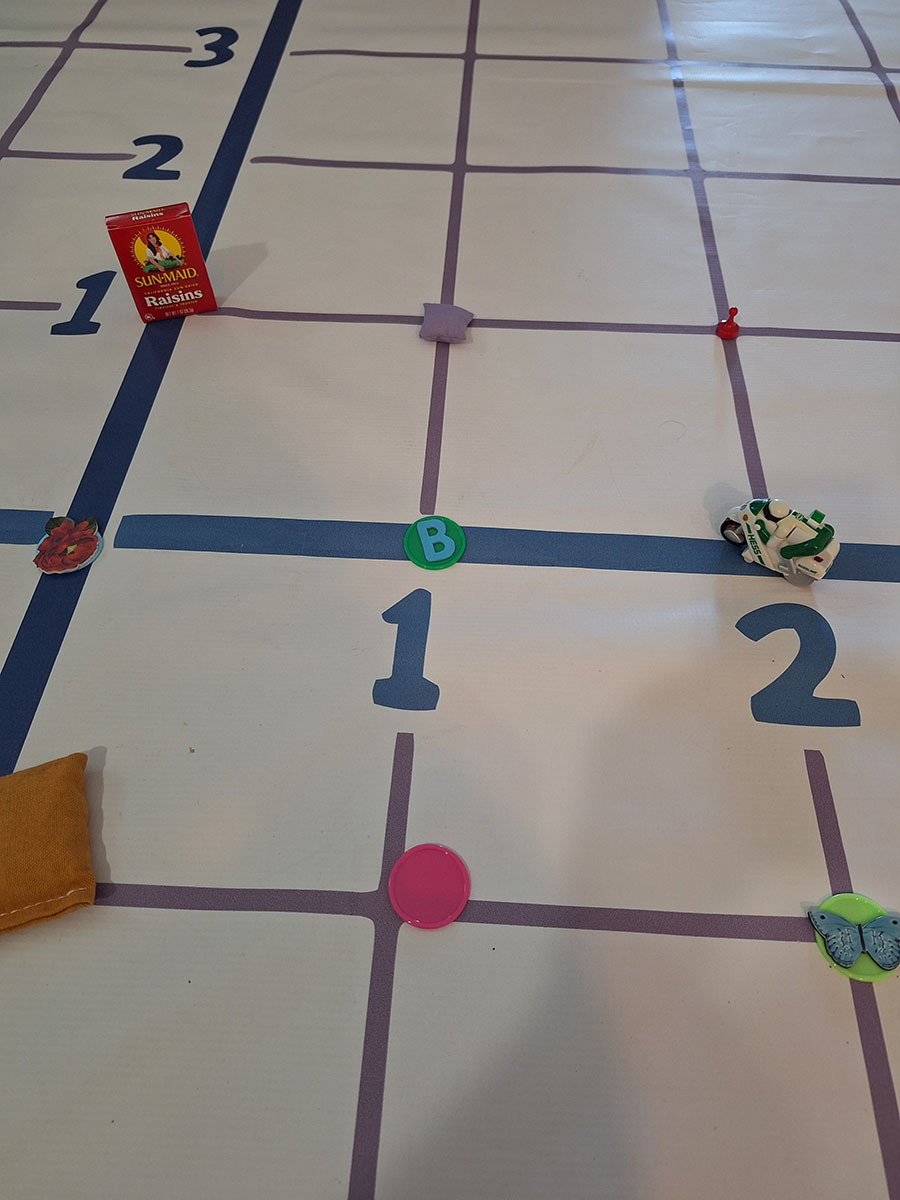
There are so many items you can use on your coordinate plane mat to mark points when students are first learning how to plot and read coordinates.
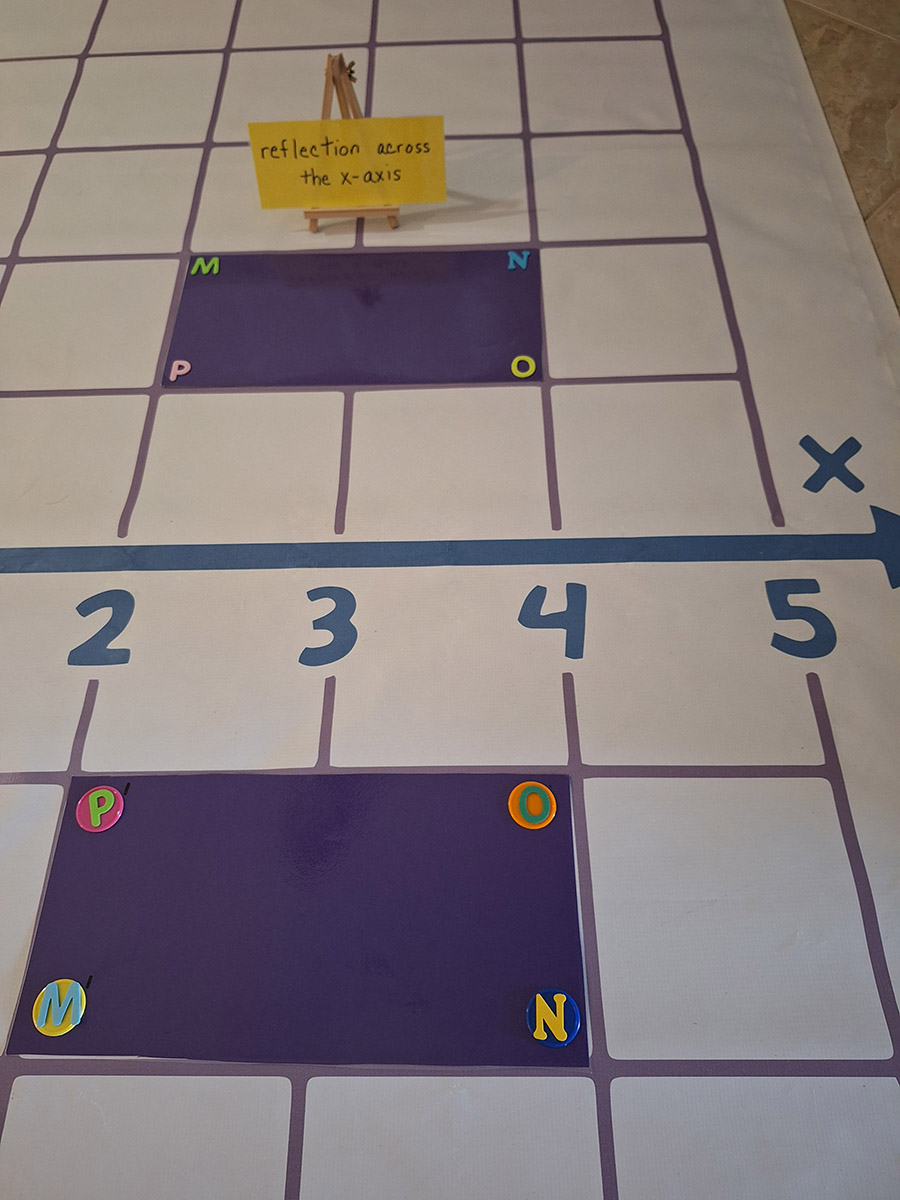
Reflection Across the x-axis
Measure and laminate shapes like rectangles and right angles to practice transformations. Make two of each for the pre-image and image. You can use self-adhesive foam letters. Also, you can make removable points by placing foam letters on chips.
(See the materials pic above for details.)
(See the materials pic above for details.)
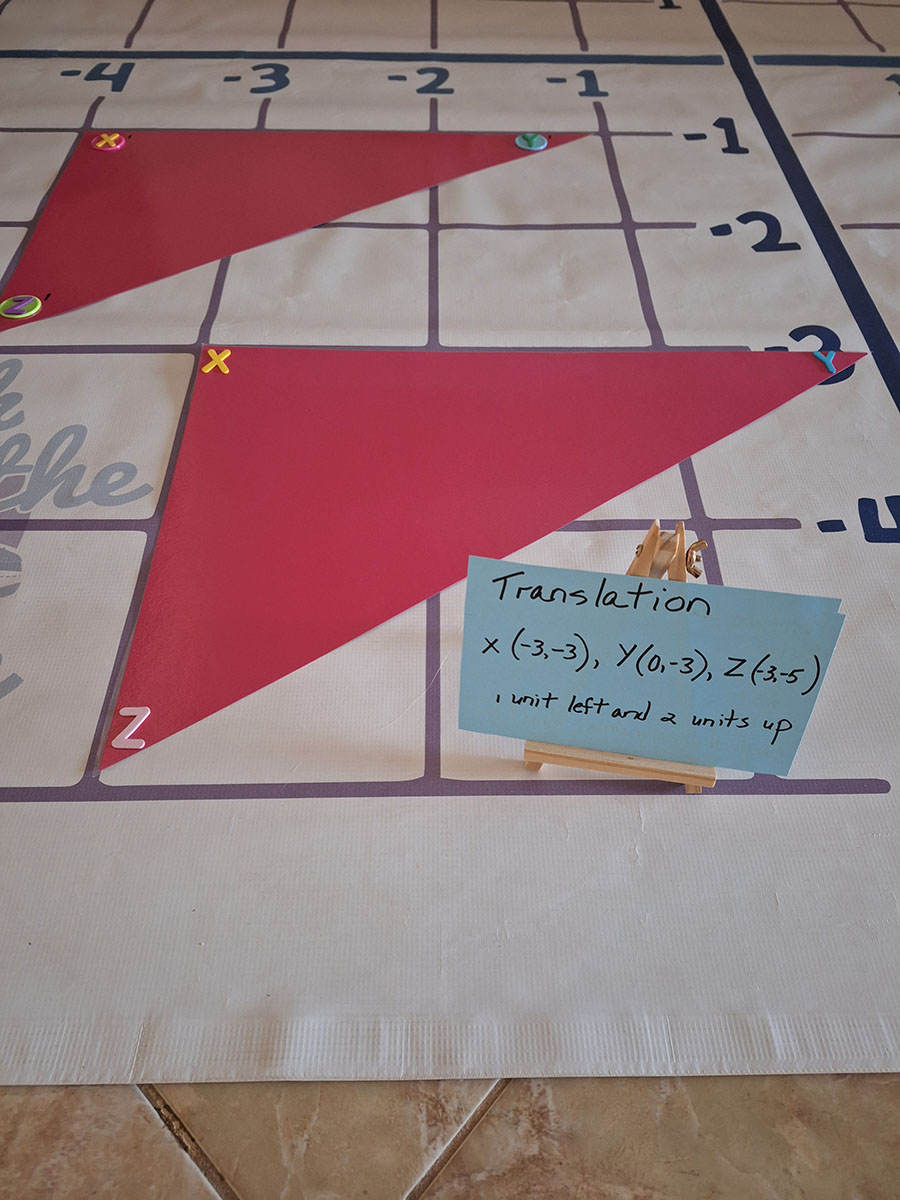
Translation, one unit left and two unit up
Tip: You can stick the foam letters on the pre-image. Students can use chips with foam letters for the image for easy placement and removal. They can also use an erasable marker to make the prime notations on each point.
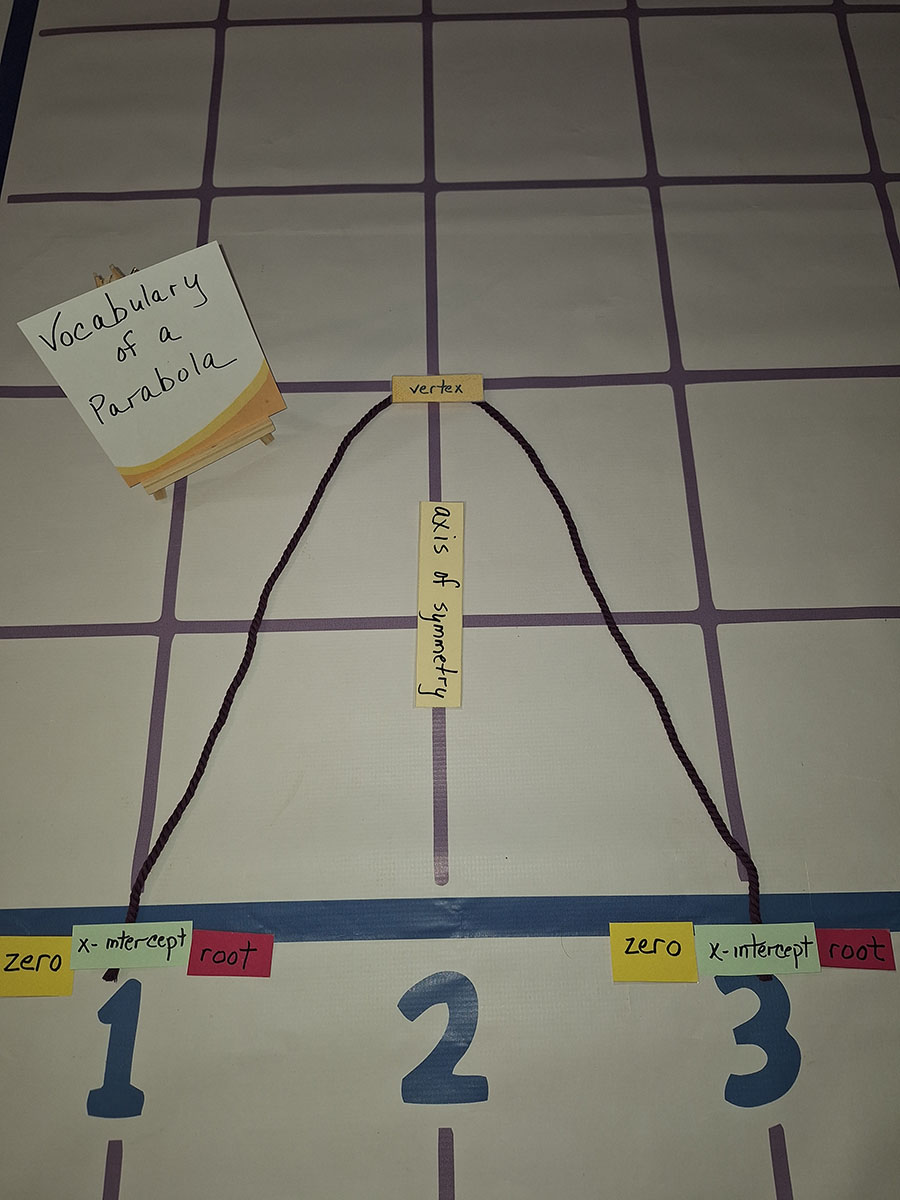
Vocabulary of a Parabola
Tip: After students become comfortable with the vocabulary, have them place the parabola in the correct location on the graph when given the axis of symmetry, intercepts, and vertex.
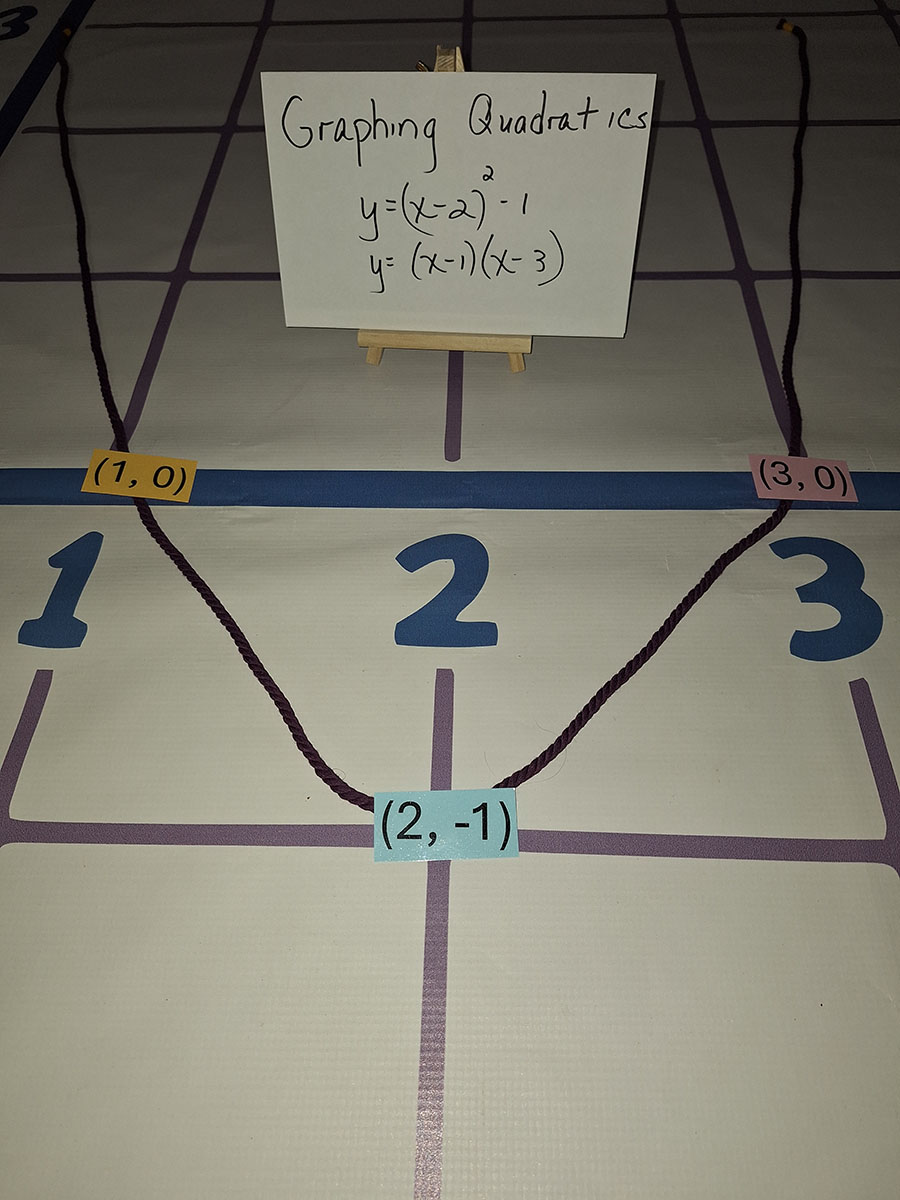
Graph Quadratic Equations
Yarn is great for graphing parabolas. It is easy for students to maneuver. Also, you can use it to graph additional functions.
Tip: Place a small piece of colored duct tape on each end to prevent the edges from fraying.
Tip: Place a small piece of colored duct tape on each end to prevent the edges from fraying.
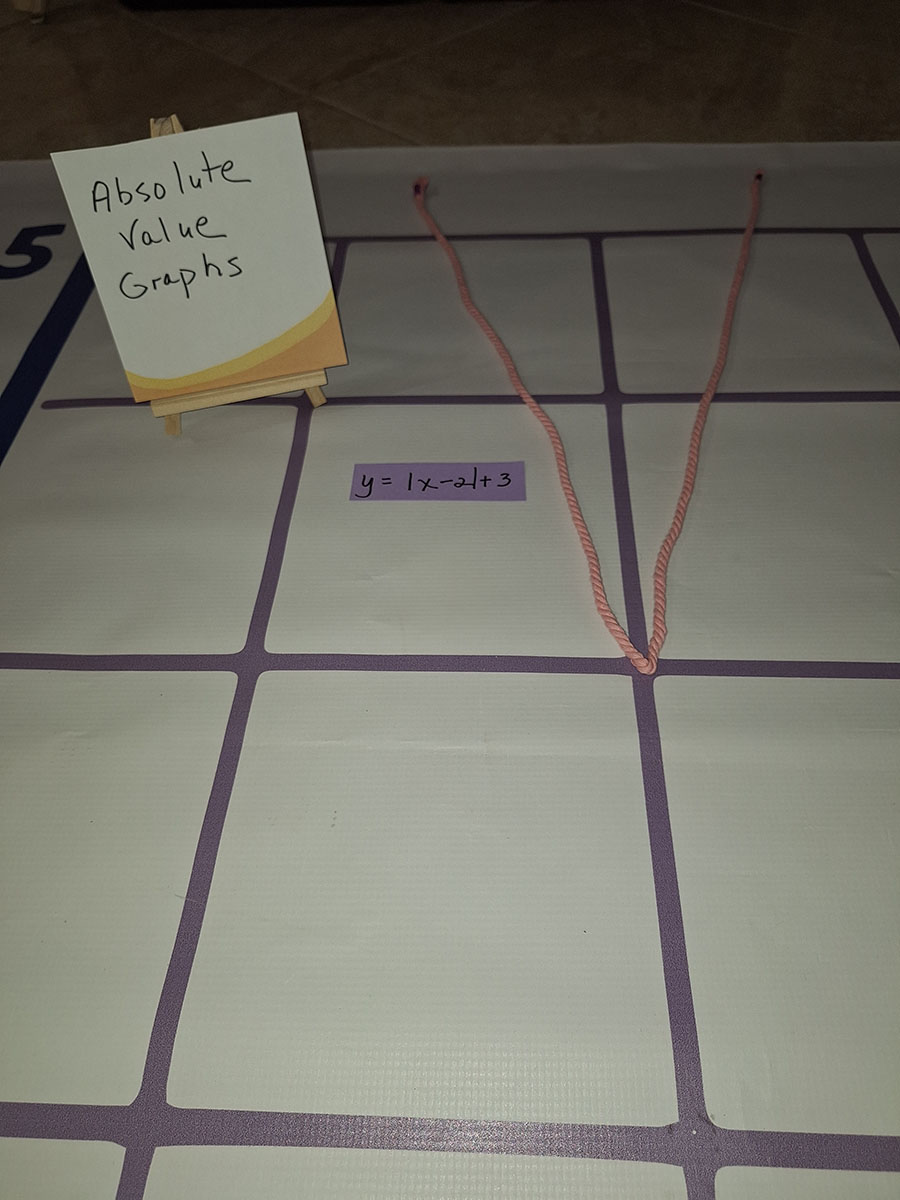
Graph Absolute Value Functions, ex. y=x-2+3
Tip: Start with the graph of the parent function. Have the students make a second graph with another piece of yarn when given the transformation equation.
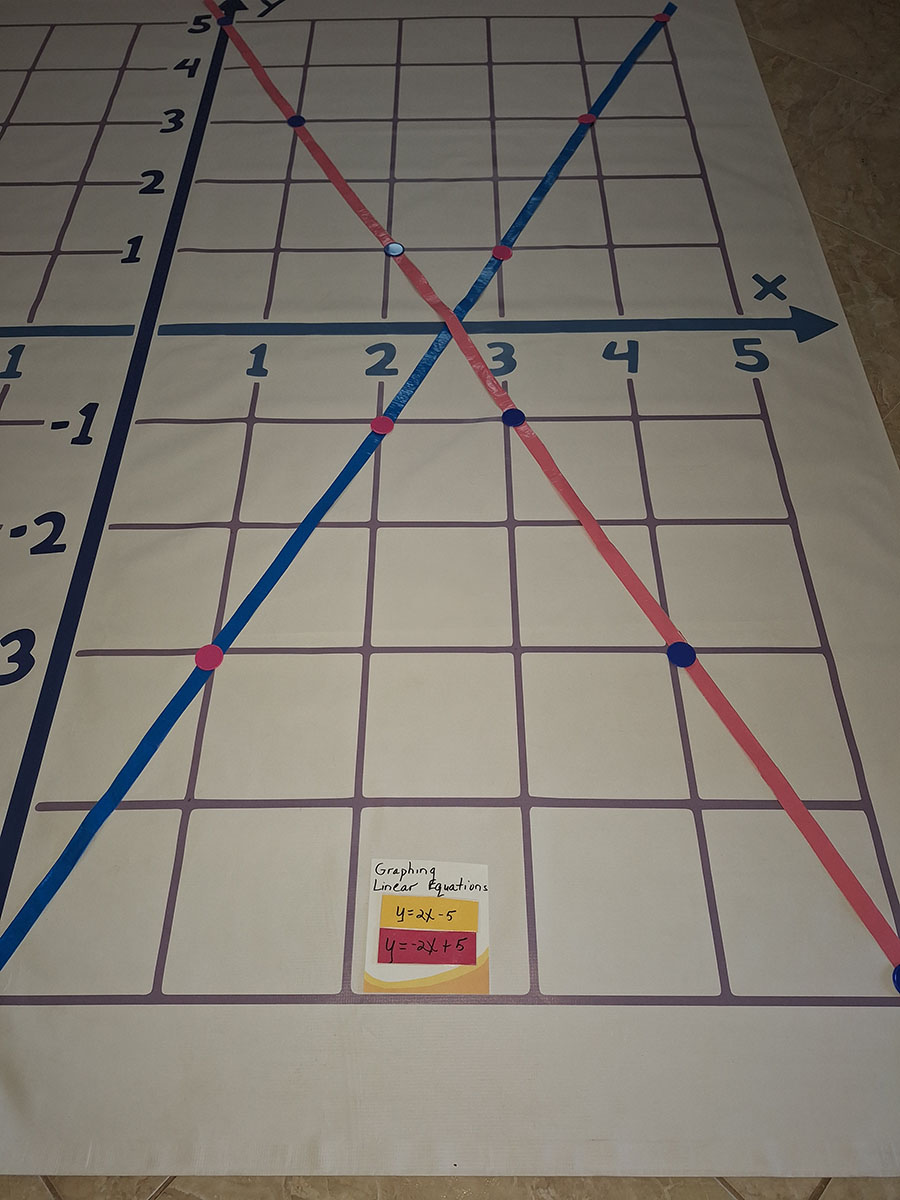
y =2x-5 and y= -2x+5
Walk The Plane is great for graphing linear equations. Have students plot points using the y intercept and slope and then place the line on the mat. Also, have them walk the direction of the lines. It is so helpful with the connection between the sign of the slope and whether the line rises or falls.
Tip: Yarn is not recommended to represent lines. Duct tape folded over on itself is used in this picture. I followed directions on a Sophie’s World video. The lines look great and are very durable.
Tip: Yarn is not recommended to represent lines. Duct tape folded over on itself is used in this picture. I followed directions on a Sophie’s World video. The lines look great and are very durable.
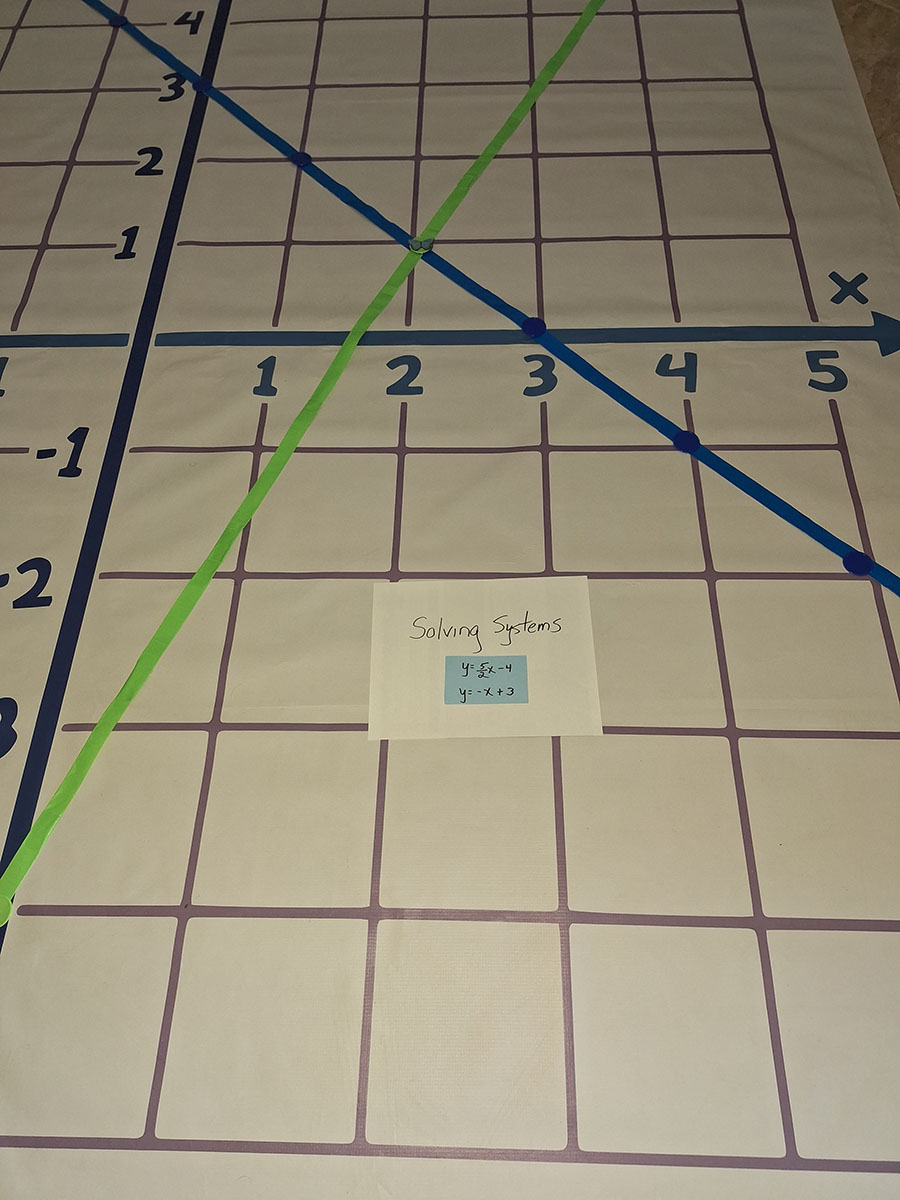
Solving Linear Systems
Tip: Have students place the ordered pair over the intersection. (See the materials pic.)
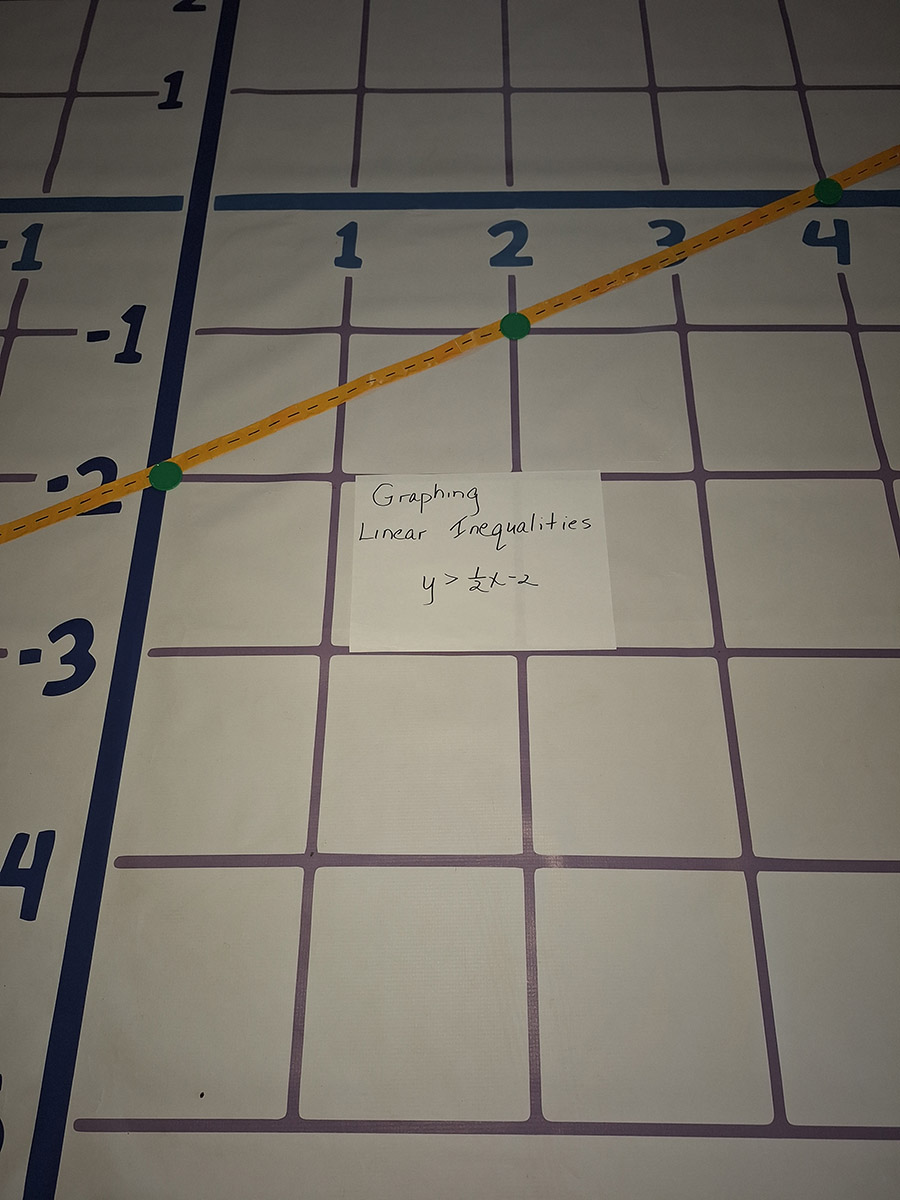
Graphing Linear Inequalities
Tip: Use one of your duct tape lines and draw a dashed line to represent greater or less than inequalities. After graphing, direct the students to stand on the side containing the solutions. They can explain why the solutions are there.
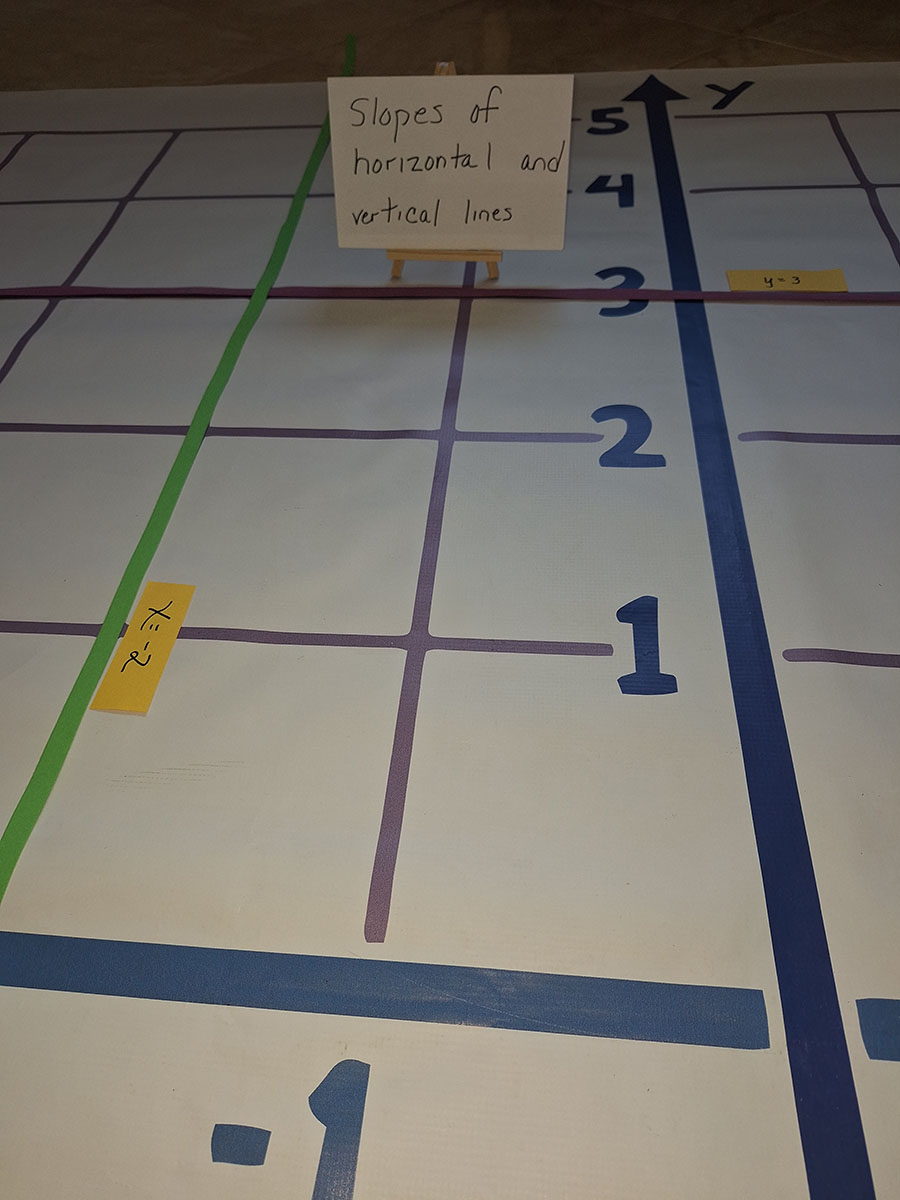
Slopes of Horizontal and Vertical Lines
Tip: Have students place a few ordered pairs on the horizontal or vertical line so they can see that the x or y coordinate is the same in each.
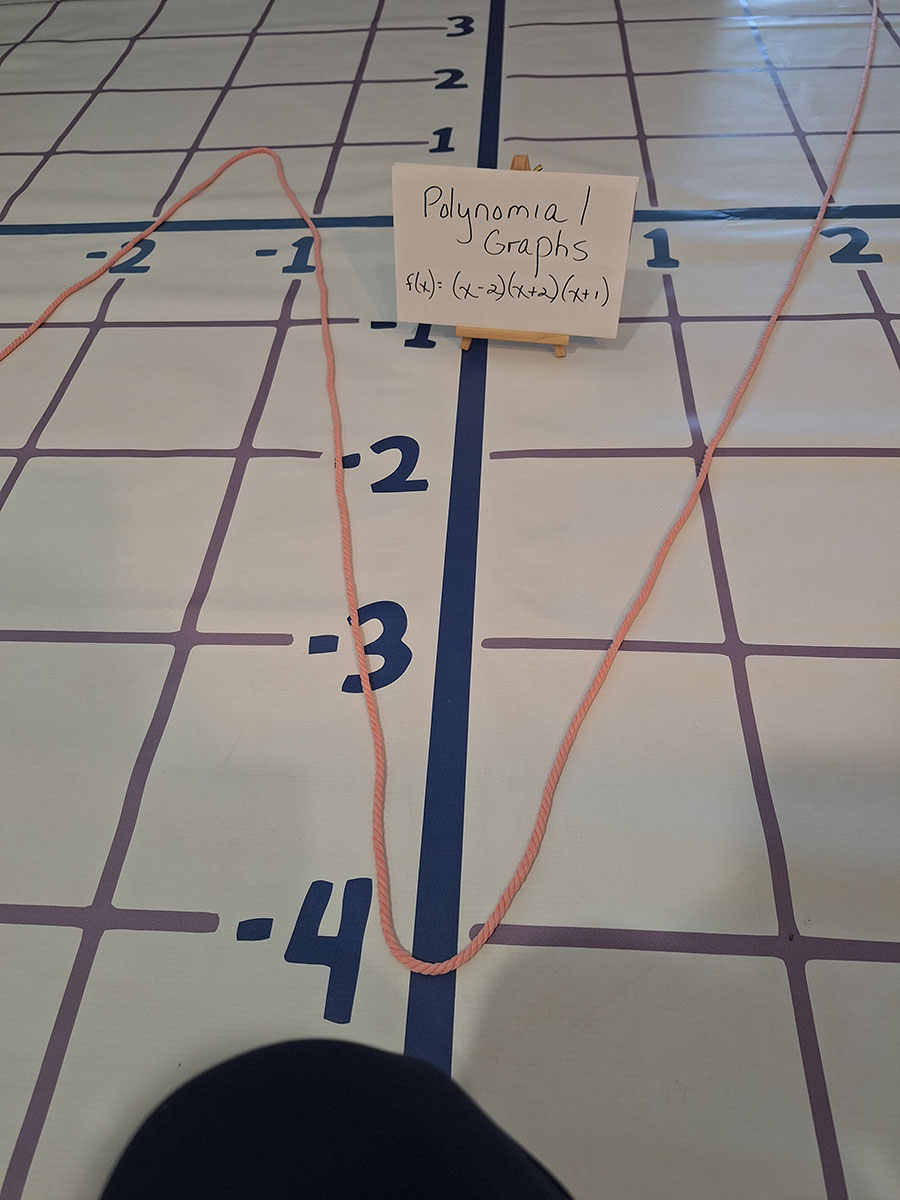
f(x) = (x - 2)(x + 2)(x + 1)
Use yarn or thin ribbon for polynomial graphs. Walk The Plane is great to help with concepts like end behavior, intercepts, and multiplicity of roots.
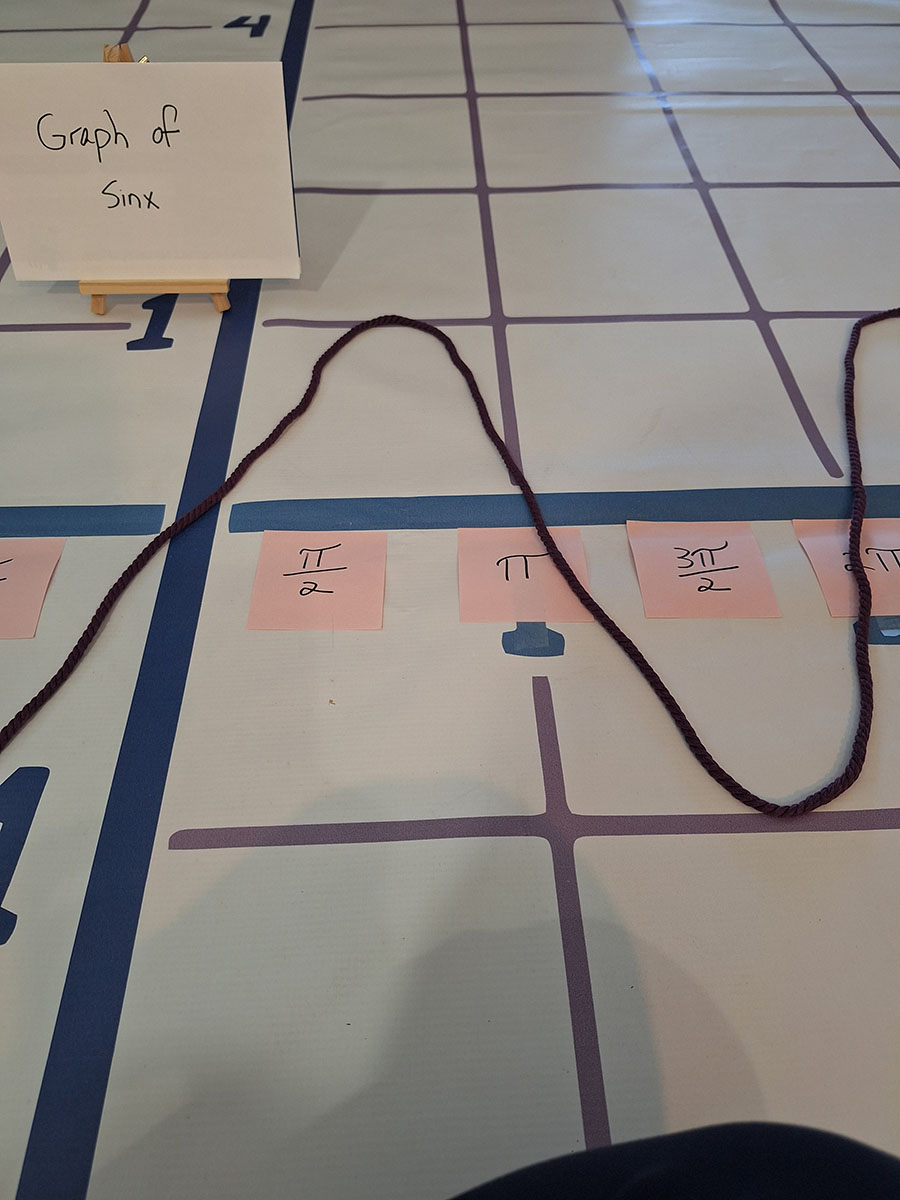
Sine and Cosine Graphs
Thin ribbon is used in this picture.
Tip: Use post it notes to change the units on the x-axis to degrees or radians.
Tip: Use post it notes to change the units on the x-axis to degrees or radians.